What are the best private key storage methods?
TL;DR – The best way to store private keys is to do so in a non-digital format.The sturdier the method of storage, the better.
Hundreds of thousands, if not millions, of Bitcoin and cryptocurrency enthusiasts have lost countless amounts of their digital assets because of improper private key storage techniques or failing to back up their private storage.You may have notoriously heard of a UK national James Howells who threw away a laptop with 7500 bitcoin on its hard drive. Simply put, Howell did not write down his private key on a sheet of paper. If he stored it anywhere, he stored it directly on the laptop’s hard drive (likely in a notepad file). When he threw away that laptop he also threw away the seven thousand five hundred Bitcoin, and he has spent a long time trying to recover it.
And a quick side-tangent just for clarity: The term “private key” can frequently be confused with the terms seed phrase, recovery phrase, backup phrase, mnemonic, mnemonic phrase, mnemonic seed, seed words, Secret Recovery Phrase (SRP), recovery seed, wallet backup, secret phrase, security phrase, recovery key, BIP39 phrase, 12-word phrase, 24-word phrase, and these last two are perhaps least accurate in description: “passphrase” or “password.”
Fully understanding the situation of precisely how someone may have lost their cryptocurrency or bitcoin is important. In the future, we will create a blog that fully explains common private key storage techniques used by popular cryptocurrency and bitcoin applications.
First, what are private keys?
With Bitcoin and Cryptocurrency every wallet has both a public key and a private key. The public key, which is not to be confused with the wallet address. Theoretically, the entire world could know your wallet address and would be powerless to access it if they had no way to get your private key.
What is a public key? In terms of Bitcoin wallets, a public key is generated by a signature from a private key. It spawns wallet addresses.Therefore, whoever controls the private key controls a wallet or the balance of a specific wallet.

It’s important to note the following: The private key is a random string of letters and numbers. A seed phrase, recovery phrase, or mnemonic phrase is a human-readable format for a private key. The main point is to make it readable to human eyes. In the extremely early days of the internet, you would use an IP address (142.250.72.14 instead of “google.com”) to connect to a server or website. Later, we created DNS (domain name services) so that we could make this human readable and easier for ordinary people to access (“google.com” instead of 142.250.72.14). The reason why “phrase” is frequently used to describe it is because it’s typically 12 or 24 English words that you can write down on a sheet of paper. Speaking of paper, now would be a very good time to segway into the important paragraph below on actual storage.
What are the safest and sturdiest ways to store private keys?
These days, almost every single Bitcoin wallet out there will enable you to create a 12 word seed phrase by default instead of the private key directly. This is just fine because if you have the seed phrase, then you have the private key.
If you live in a community that is relatively safe and burglaries are completely unheard of, if not extremely difficult to make happen, and if a house fire or a home fire is not likely to destroy anything in your home, then simply writing your private key down on a sheet of paper using a 12 or 24 word seed phrase is enough. If you have a safe that no one can pry open without the code very easily, then just put the recovery phrase in that safe.
If you want to employ an especially sturdy method to store your seed phrase, which contains your private key, then a more “hardcore” method of choice could be to simply use sheet metal. The sheet metal method has not been used by any one member of our staff, and you might have hit or miss results if you aren’t careful. Nonetheless, there are plenty of tutorials on YouTube where people show the most reliable methods of using sheet metal to store a seed phrase, which again contains that oh-so-important stored private key.
What is the safest way to store private keys in a community that is not safe?
Some would say that the method suggested here is counterintuitive or controversial, but you could get a security deposit box at a bank to store private keys. Some banks will charge about $20 per year to do this. However, you might want to remember that this means you are risking banks indirectly taking custody of your cryptocurrency or Bitcoin.This is where risk management and understanding and assessing your own risk appetite becomes important.
Another alternative to the above would be to divide a 12 or 24-word seed phrase across multiple sheets of paper, and place them in multiple locations that only you know. However, this is the important part to remember and risk associated: If you do not have the full recovery phrase, you cannot recover your cryptocurrency easily. You will need to know how to use brute force software. And this is the most important part: When you are entering your seed phrase into a cryptocurrency or Bitcoin wallet application, you cannot get the order wrong. So that means you must number all of the words correctly in order when you are writing them down on paper or storing them on sheet metal.
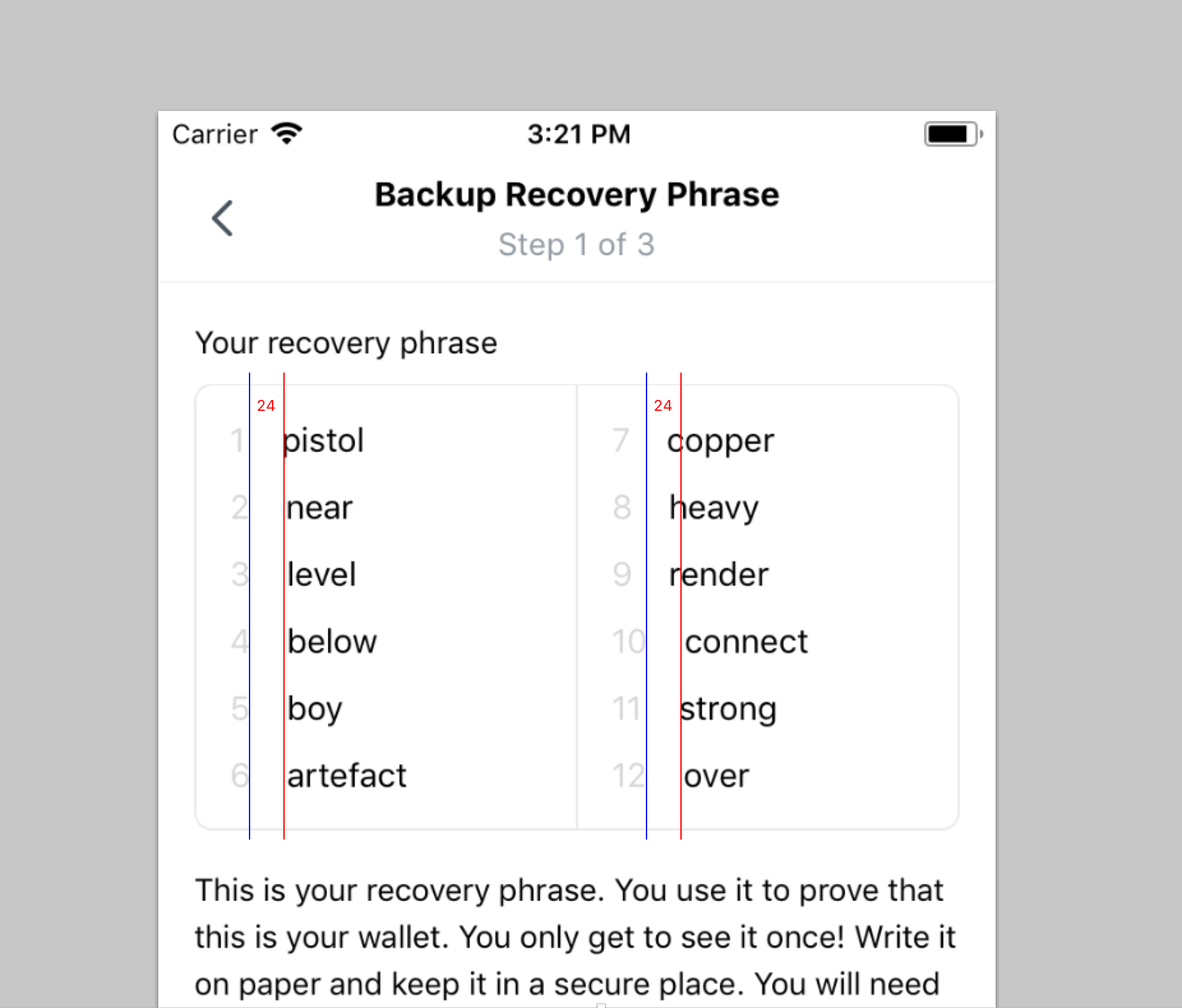
What is the worst way to store private keys or a seed phrase?
Any digital method you can think of to store private keys is one of the least secure. Do not get comfortable with using a computer or a mobile phone to store your recovery phrase. Do not get comfortable with the idea of using your own email or your own private cloud storage on OneDrive or Google Drive to store your recovery phrase. There might only be one exception where you would want to do this, and that’s when you are dividing your seed phrase across multiple locations. But even then, you don’t want to store, by any means possible, the full recovery phrase in any digital medium. The reason why is because tech savvy nefarious actors, known more colloquially as hackers will find a way to steal your digitally stored private keys.
You can easily search stories where someone lost their crypto because they stored the seed phrase on cloud storage and a hacker found a way to get in to their cloud storage, or because a hacker got into a crypto enthusiast’s email where they emailed themselves their recovery phrase. Finally, the action of simply copying an entire seed phrase to your clipboard could be the one thing that causes your crypto to get stolen. There are websites that run malicious scripts, and as long as you have one tab open on your browser, it can read whatever you have copied to your desktop or phone’s clipboard, and then steal your recovery phrase that way.
But what about hardware wallets? That is a topic for another day. They do offer peak security, but if you are not careful, you could end up locking yourself out of your wallet.
In conclusion, no staff members at proofoftech.net have experienced theft of crypto or bitcoin, and all of them use the pen and paper storage method but are privileged enough to live in safe communities. Get a pen, get a piece of paper, number the recovery phrase, and if necessary, put it in a waterproof baggie or baglet to stop it from getting humid or wet in whatever environment it is in. Only you can choose your recovery phrase storage method. Choose wisely.
Disclaimer: The content on this blog is provided for general informational and educational purposes only and does not constitute financial, investment, legal, or tax advice. Cryptocurrency and Bitcoin investments are highly volatile and involve substantial risk. Mitigate your own risk with your own management practices. Always conduct your own research and consult a qualified professional before making financial decisions. Past performance does not guarantee future results. The author and blog assume no responsibility for losses arising from reliance on this content. Any opinions expressed are the author’s own, and any holdings, sponsorships, or affiliate relationships are disclosed where applicable.
Related reading
Continue with these related Proof of Tech guides: