What is a self-custody wallet?
TL;DR – A self custody wallet is a wallet in cryptocurrency or Bitcoin that only a single individual has ownership over and no one else.
So, have you put money into Bitcoin or cryptocurrency and thought to yourself, “Okay, great, now I own cryptocurrency?” without actually removing it from the exchange. In other words, are you one of those people who, once they put money on a cryptocurrency exchange, they just let the money sit on the exchange?In this instance, even though you have some bitcoin or cryptocurrency, it’s not actually yours until you remove it from the exchange and put it into your own wallet.
So, why do I need to know what a self-custody wallet is?
Generally speaking, one of the main reasons Bitcoin was invented was to avoid the hassle of having to deal with banks. Or rather, to introduce an asset class that can’t be stopped by conventional financial systems as well as government mechanisms. This sounds odd given the present political climate surrounding Bitcoin in America, but in the Bitcoin white paper, it is explicitly mentioned that trusted intermediaries are not needed to make transactions or verify ownership of bitcoin taking place. Therefore, you don’t need to trust an intermediary such as a bank to custody your Bitcoin and take ownership of a financial instrument. This is where the idea behind self-custody wallets and digital assets comes from.
In the conventional financial sense, self-custody wallets are simply wallets that are full of all of your US dollars in cash. Not your cash out balance, not your PayPal balance, and not your bank balance. If you do or say something that any of these conventional platforms do not like, then they have the right to deny you any services their platforms offer.
In addition to the above, another issue is something that is referred to in more recent times as a bail-in by people on wall street. In case you didn’t know, a bail-in is the opposite of a bailout. In the 2008 financial crisis, the US government printed money and gave it to all of the major banks that were failing. This is what’s known as a bailout. A bail-in is typically conducted when a bailout is not a viable option to the bank. This happened during the 2013 Cyprus banking crisis. Essentially, what had happened was two major banks in Cyprus arbitrarily deducted an amount of money from each and every one of their depositors’ bank balances.In light of this event taking place, that’s when Bitcoin broke 100 US dollars, along with riots in Cyprus and a lately-arrived bailout package from the European Central Bank after some time.
)
Why do I need a self-custody wallet for crypto? I’m not in cyprus.
Nobody can say exactly when a recession arrives. But, when a recession does arrive, the threat of a bail-in taking place increases dramatically. At this point, the question shifts from “Would you rather have all of your wealth?” to instead, “How would you rather take self custody of all your wealth?” This is why self-custody wallets become important. Because there’s a massive difference from keeping all of your money in cash versus keeping all of your money in crypto or managing risk accordingly and keeping a portion of your money in crypto and keeping a portion of your money in cash and other assets.
If all of your money is in your bank account and then suddenly you lose access to all of your money because the banks won’t let you withdraw it or because of some other geopolitical events beyond your control, then clearly you are in a tough spot. If you would prefer to store all of your wealth in cash, then at the very least, it’s advisable to keep amounts that you deem appropriate in your bank account, in cash at your residence (spread across different strong-performing currencies of your choice), and in stablecoins on a self-custody wallet of your choice.
Why shouldn’t I keep all of my money in cash that I keep with myself at all times?
A United States Marine combat veteran had his life savings of $87,000 confiscated by police under American civil forfeiture laws. This is a man that simply did not like trusting banks. Without going too much into detail, Stephen Lara did nothing illegal, but because a police K-9 bloodhound detected narcotic residue on some of the cash money he was carrying, (which over 70% of US dollar bills in circulation have) they were legally obligated to confiscate his life savings. A quick Google search will tell you that after a seven month legal battle his money was returned to him.
It is stories like the above that make self-custody wallets and self custody of one’s own finances important. You see, whenever you are traveling with large amounts of cash on your person, internationally or domestically, there is always the risk of something bad happening to it. Let’s reframe this from a different angle: If you have eighty seven thousand dollars in cash on your person, and you are doing nothing illegal, authorities in all relevant channels – customs at an airport, police officers on patrol, or branch managers of a bank you want to do business with – At the very least, could scrutinize such a large balance of cash being on your person, or at the very worst could find a way to get it confiscated from you. However, if you have 87,000 US dollars in a properly collateralized stablecoin, such as USDC (not an ad, simply pointing out what the most “compliant” stablecoin is) on a self-custody wallet, no scrutiny or harm can come to you.
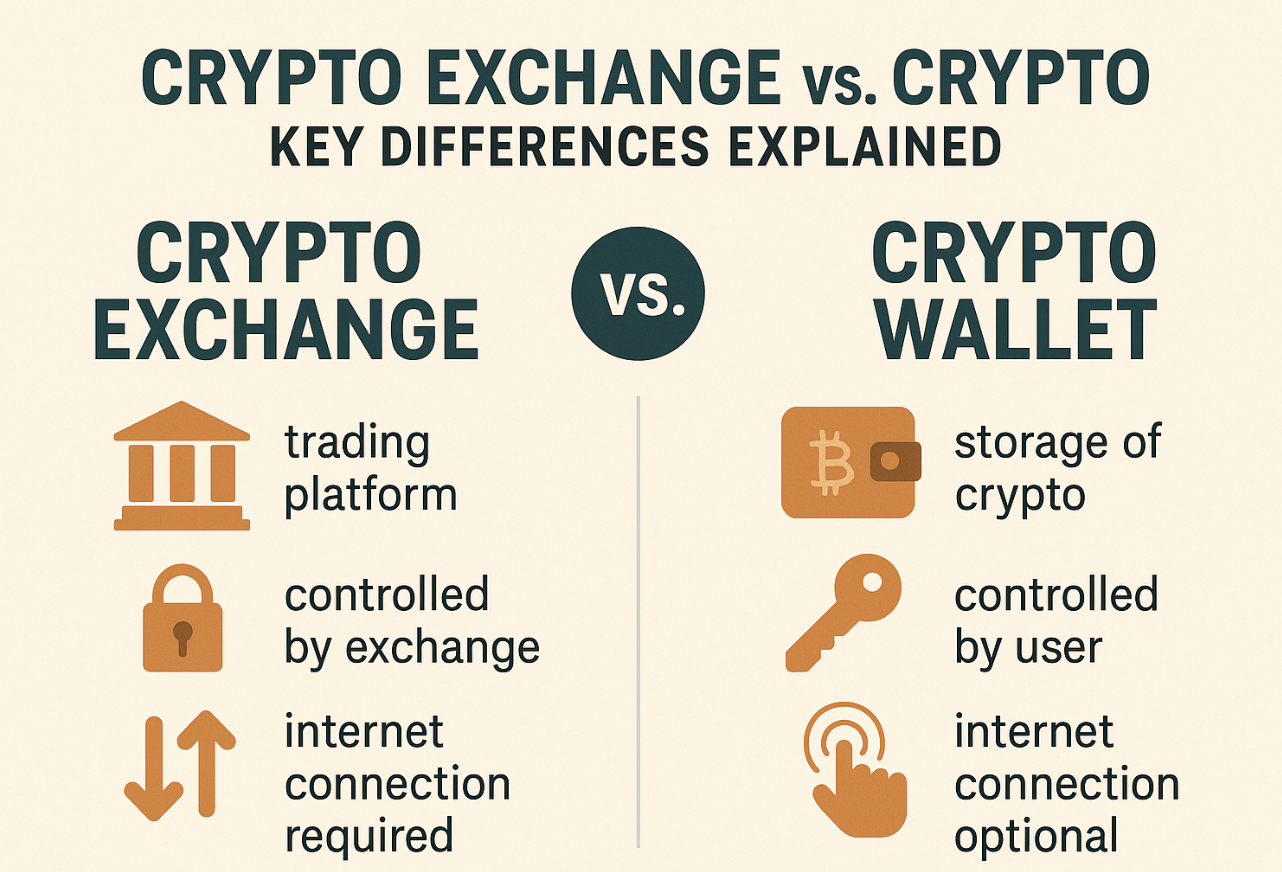
Withdrawal fees are hefty sometimes. When do I move crypto to my self-custody wallet?
Broadly speaking, this is a question that requires a very subjective answer, but there is also another way to think of the answer. How much is one month’s rent for you? Is the amount of money on your exchange of choice less than or equal to your salary? How much money could you lose, and not feel harmed at all?
Ultimately, withdrawal fees and purchase fees are determined by the flexibility of which platform you use. This is not an ad, but if you choose to use Bitcoin, there are applications like Cash App and Strike that allow you to determine when you would like to withdraw your Bitcoin purchases and to which of your own self-custody wallets you would like to send them to once you hit a certain threshold of bitcoin accumulated. If you are looking for stable coins, on the other hand, in North America, there are laregely nothing but good things about Kraken Pro which minimizes the fees associated with purchases and withdrawals from the exchange.
If you ask anyone who works from home as a software engineer and travels abroad to take advantage of the cheap cost of living in other countries, they will tell you that taking 100% ownership of their digital assets and not relinquishing custody to anyone else has been a god send. If you travel from one country to another with more than $10,000 in cryptocurrency, no one’s going to ask. If you travel from one country to another with more than $10,000 in cash, it is likely to be confiscated by the authorities of the country you are landing in.
Do people on Wall Street need this? Most likely not. Do the people running Silicon Valley and making the world go round need this? Once again, probably not. We hope we’ve made it obvious enough about why self-custody wallets are important in this blog. In case it needs mentioning again, people who live in countries with unreliable banking systems and no easy access to more stable currencies, people who want to mitigate their risk and holdings (this article’s author included), and people who are frequent travelers all find self custody of digital assets to be useful, if not necessary.
Disclaimer: The content on this blog is provided for general informational and educational purposes only and does not constitute financial, investment, legal, or tax advice. Cryptocurrency and Bitcoin investments are highly volatile and involve substantial risk. Mitigate your own risk with your own management practices. Always conduct your own research and consult a qualified professional before making financial decisions. Past performance does not guarantee future results. The author and blog assume no responsibility for losses arising from reliance on this content. Any opinions expressed are the author’s own, and any holdings, sponsorships, or affiliate relationships are disclosed where applicable.
Related reading
Continue with these related Proof of Tech guides: