Hot Wallet vs. Cold Wallet: What is the difference?
In Short Summary: A hot wallet is a wallet that is connected to the internet and actively sending and receiving transactions with bitcoin and / or cryptocurrency. A cold wallet has never been connected to the internet and can only receive transactions until the owner of that cold wallet decides otherwise.
So, you have decided to get into crypto and Bitcoin, but you don’t know if a hot wallet or a cold wallet is right for you. Well, then, you’ve come to the right place. Let’s look at the subtle yet very important differences on the topic of hot wallets vs. cold wallets.
IMAGE: Hot Wallet vs. Cold Wallet differences denoted, courtesy of Binance Academy
)
What is a Hot Wallet? Do you have examples?
As stated in the short summary at the beginning of this article. A hot wallet is actively conducting transactions both receiving and sending cryptocurrency or bitcoin on blockchains. They are interacting with dApps, they are minting NFTs, they are creating new coins, they are buying VPN subscriptions with the balance that is on them. In that regard, you could say that since they are active, many of them are embedded in plugins used by mobile devices and web browsers such as Google Chrome, Firefox, and Brave Browser. Popular choices include Trust Wallet (mobile), Token Pocket Pro (mobile), and Metamask (both mobile and desktop web browser plugins).
This also makes hot wallets markedly more susceptible to a nefarious actor or hacker trying to get hold of whatever balance is available in that hot wallet. We can briefly go over these together, but if you’re not interested, then you may just want to go ahead and skip down to the section below where we answer the question “What is a cold wallet?” As well as bring up the best creation and storage mechanisms.
If you are going to be buying or storing bitcoin cryptocurrency long term, then a hot wallet is very likely not the safest solution for you to use. It’s because a hot wallet is meant to specifically both send and receive transactions. Hot wallets are typically used by retail investors that are trying to buy many new coins, cryptocurrency exchanges (which are susceptible to hacks, like binance, Mt. Gox, and others), liquidity pools, and other active cryptocurrency wallets. Generally speaking, hot wallets make one transaction a month at least.
Generating a new hot wallet is very easy. All you need to do is really just download a wallet application for your mobile device or a plugin for your browser, and then launch the wallet and write down whatever recovery phrase, seed phrase, or private key you are shown. Avoid using digital storage methods, as this is what makes it so regretfully easy to lose your crypto. Write it down on a sheet of paper. Only institutions that have bank-grade security and encryption should consider digital storage.
What is a Cold Wallet? How can I make one?
Before getting too deep into this, it’s important to note that a cold wallet is not always a hardware wallet, but a hardware wallet can be a cold wallet or a hot wallet. This is a different topic for a different time.
Generally speaking, a cold wallet is a wallet that has never made a transaction and has never ever been exposed to the internet. In most cases, the steps below may be acceptable:
- Download a mobile wallet application to your mobile device. Do not open it.
- Turn off your mobile data and disconnect from any wifi connections.
- Open the wallet application. Write down your private key mnemonic phrase (seed phrase) on paper.
- Take a screenshot of the QR code(s) of wallet address(es) associated with that private key in step 3. Copy the wallet addresses to a notepad file.
- Delete the wallet application.
- (optional) Factory reset the mobile device, but if you feel it is necessary, destroy the mobile device in a way that makes data irrecoverable. Obviously, you should only do this if you never want to use that mobile device ever again.
You can repeat steps 1 to 4 in the above to create as many cold wallet addresses as you feel may be necessary, but it’s worth noting that once you recover a cold wallet to a mobile application and make a transaction, it is effectively no longer a cold wallet. That does not, however, mean that you should be afraid of making transactions with a cold wallet. Rather, the idea is if you recover that cold wallet and put it into a hot wallet and then suddenly an unauthorized transaction has taken place, then you know that the unauthorized transaction happened as a result of the device that you used the recovery phrase with.
IMAGE: visual abstraction of a cold wallet & cold storage. Source: trading212.com
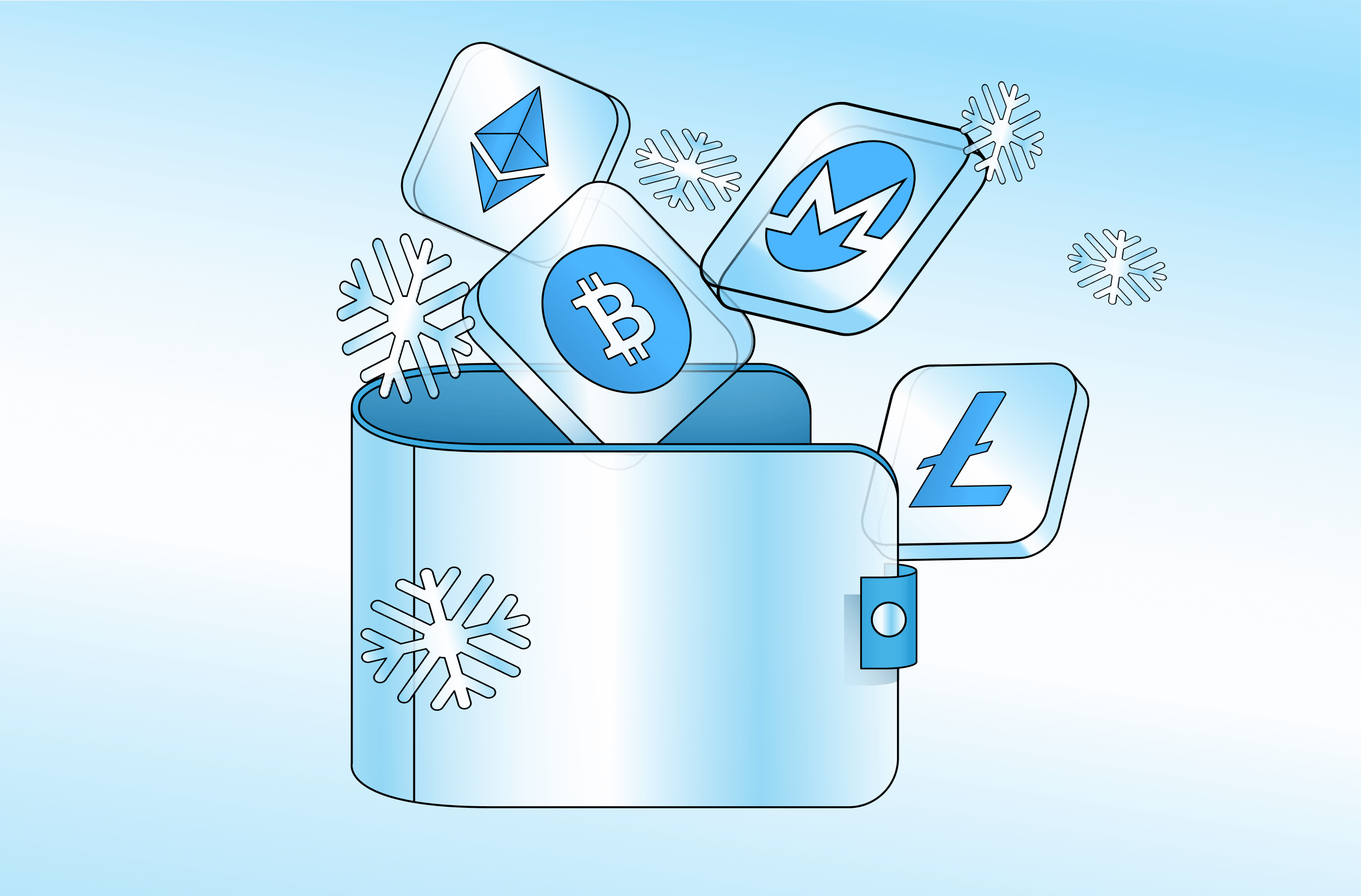)
So, when it comes to hot wallets vs. cold wallets which one is safer?
Truth be told, nobody at Proof of Tech has had a hot wallet or a cold wallet get compromised. So, while this article does create the allure that a hot wallet is less secure than a cold wallet, that is not necessarily always true. Operational Security (Opsec for short) determines the overall safety of any and all wallets that you have in your possession.
So, what are the inherent risks associated with a hot wallet that make it seem less safe than a cold wallet? That is the perfect question. Generally speaking, it depends on what smart contracts and what decentralized applications you have given permission to interact with the balances of your hot wallet. Generally speaking, this is a hazard that applies more to “Web3” enthusiasts and Ethereum and other altcoin & NFT users and not bitcoin maximalists or bitcoin purists. The majority of bitcoin-exclusive applications, the most popular ones that exist, do not involve the use of smart contracts or decentralized applications. Do bitcoin wallets become compromised? Yes. But do they become compromised much easier than ethereum or “Web3” wallets? That is a discussion for another day.
Concluding the differences on the topic of hot wallets vs. cold wallets, we have to consider the following:
1. Bitcoin and Ethereum cold wallets are equally safe.
2. The most popular bitcoin hot wallets are safer than the most popular ethereum hot wallets.
3. Ethereum and “Web 3” hot wallets have more ways to be attacked than bitcoin hot wallets.
Bonus: What is a hardware wallet? How are they different from hot or cold wallets?
Hardware wallets, if you are using the correct brand, offer the best of both worlds: The private keys stay private and unexposed to the internet, but with the click of a button on the hardware device, the user of a hardware wallet can authorize web 3 transactions or web 3 smart contract calls and actions taking place. There are many different types of hardware wallets.To better understand best hardware wallet practices, as well as how to store hardware wallets and private keys, there are many trustworthy channels on YouTube that have made tutorials that you can find regarding this topic.
IMAGE: Hardware wallet signature & transaction workflow. Source: [Altrady.com](http://Altrady.com)
](http://cdn-web.altrady.com/how_hardware_wallet_works_offline_signing_0ecc9eddb7.png))
At the end of the day, you are the only person who can determine which wallet type is best for you. Ask yourself if you are aiming to save crypto, or if you are looking to interact with Web3 applications, or if you just want to go the simplest, time-tested, and proven route of saving a rational amount of money in Bitcoin with a steady dollar-cost average strategy. Once you answer that question, then you are ready for the next step of choosing between a hot wallet, cold wallet, and a hardware wallet.
Disclaimer: The content on this blog is provided for general informational and educational purposes only and does not constitute financial, investment, legal, or tax advice. Cryptocurrency and Bitcoin investments are highly volatile and involve substantial risk. Mitigate your own risk with your own management practices. Always conduct your own research and consult a qualified professional before making financial decisions. Past performance does not guarantee future results. The author and blog assume no responsibility for losses arising from reliance on this content. Any opinions expressed are the author’s own, and any holdings, sponsorships, or affiliate relationships are disclosed where applicable.
Related reading
Continue with these related Proof of Tech guides: